Cymatics · meaning
What is cymatics, and how does sound become visible?
Cymatics is the study of the visible shapes sound makes when it sets a surface vibrating: sand on a metal plate, water, a membrane. Every frequency leaves its own pattern, because the surface only stays still along certain lines, and that is where the sand gathers.
Ernst Chladni published the experiment in 1787; the Swiss scientist Hans Jenny coined the word in 1967, from the Greek kyma, wave. Cymatica is cymatics online: the plate's figure worked out in your browser with a model of a vibrating plate, in real time, with four ways to see it.
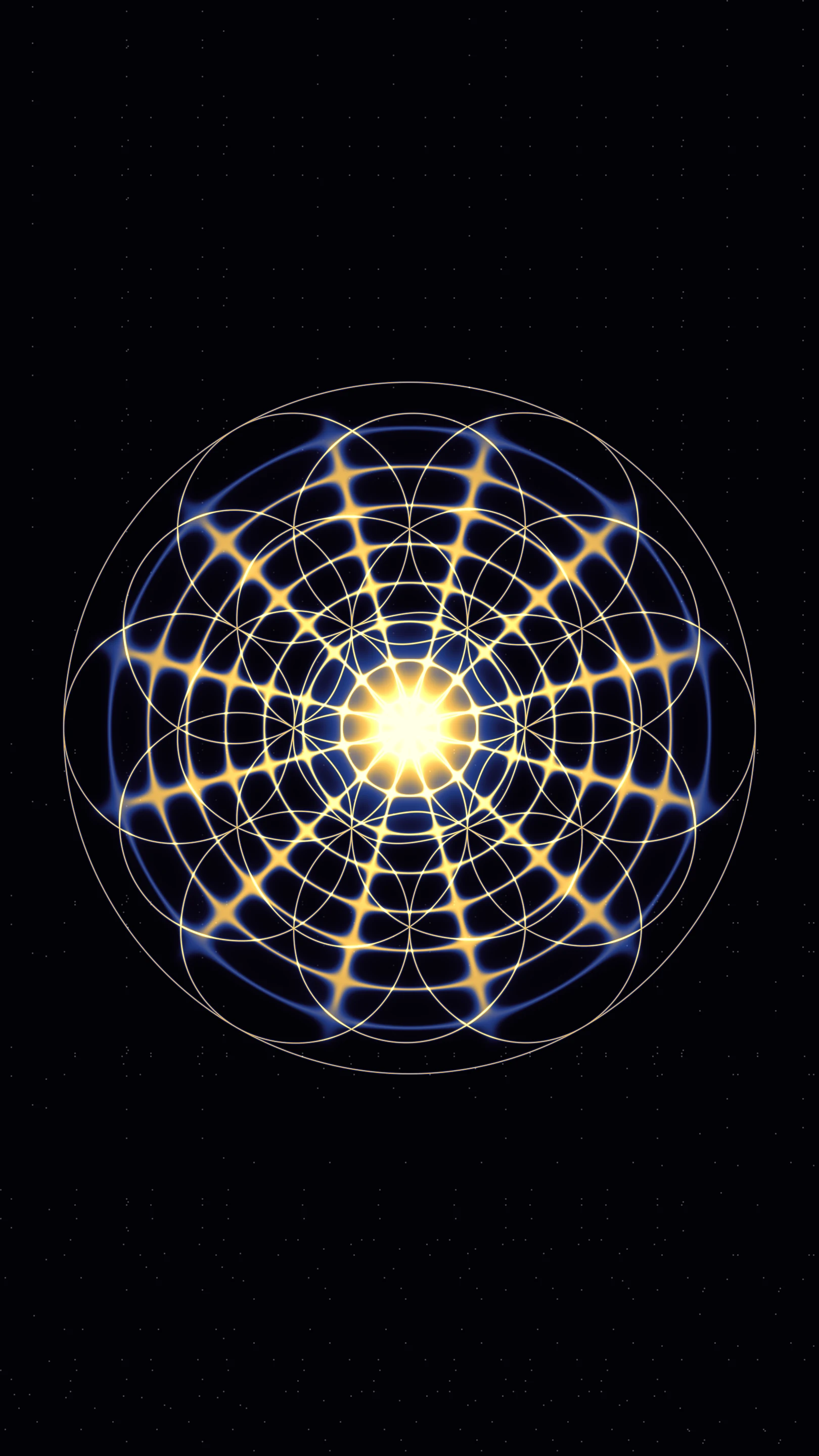
Twenty seconds, with sound.
This is the app recorded as it is: the Flower of Life at 528 Hz, 963 in water and Metatron's Cube on a plate. The figure underneath is formed by each frequency; the Flower and the Cube are symbolic layers.
A plate, sand and a tone. That's cymatics.
In 1787 Ernst Chladni ran a violin bow along the edge of a metal plate covered in sand. The sand fled the areas that vibrated and settled on the lines that stayed still. Each frequency formed a different pattern.
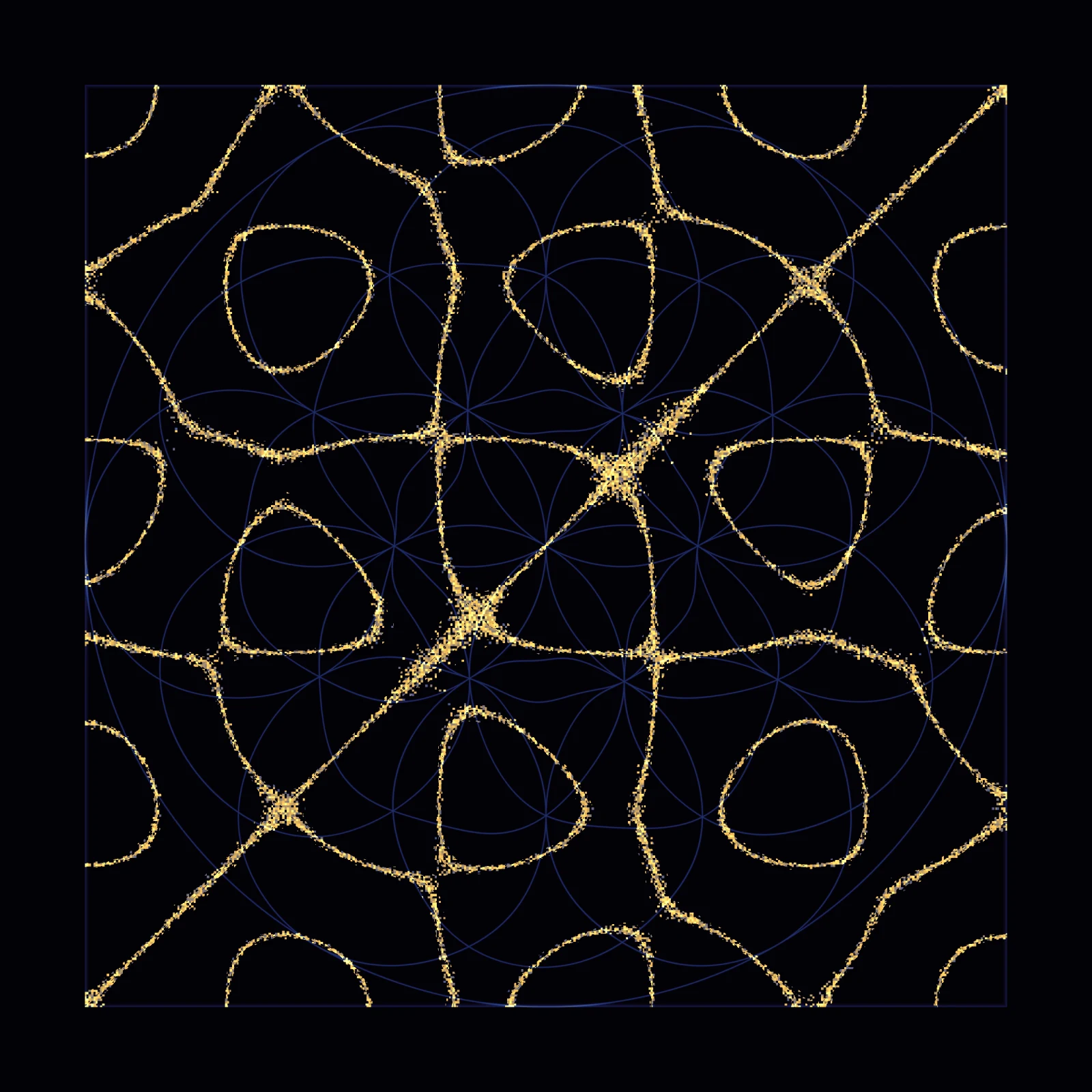
Fig. 02 · Square plate, Chladni mode. 174.00 Hz · F3
1787
Ernst Chladni, a metal plate, a violin bow, sand.
The sand settles
Where the sound rests, the sand stays still and the shape appears.
Unique
Every frequency has its own shape. Change the note and the shape changes with you.
Cymatica does the same with physics. In Chladni it calculates a square plate driven from the center, as in a real setup, and leaves the sand where the plate does not move; in Mandala, a drum, with its exact nodal lines; Water is a wave model, and says so; XY is the real Lissajous curve of the two tones. The higher the frequency, the more nodal lines and the more cells. The layers you can put on top are something else: symbolic geometry from the tradition, not calculated from the sound. If you prefer the old free figure, it is there as Artistic mode.
Try the 4 modes at 432 HzOne frequency, four modes
Switch mode and you see the same frequency take another form.
A frequency does not set the mode: it sets the frequency, the ratio and the layer, and you choose how to see it.
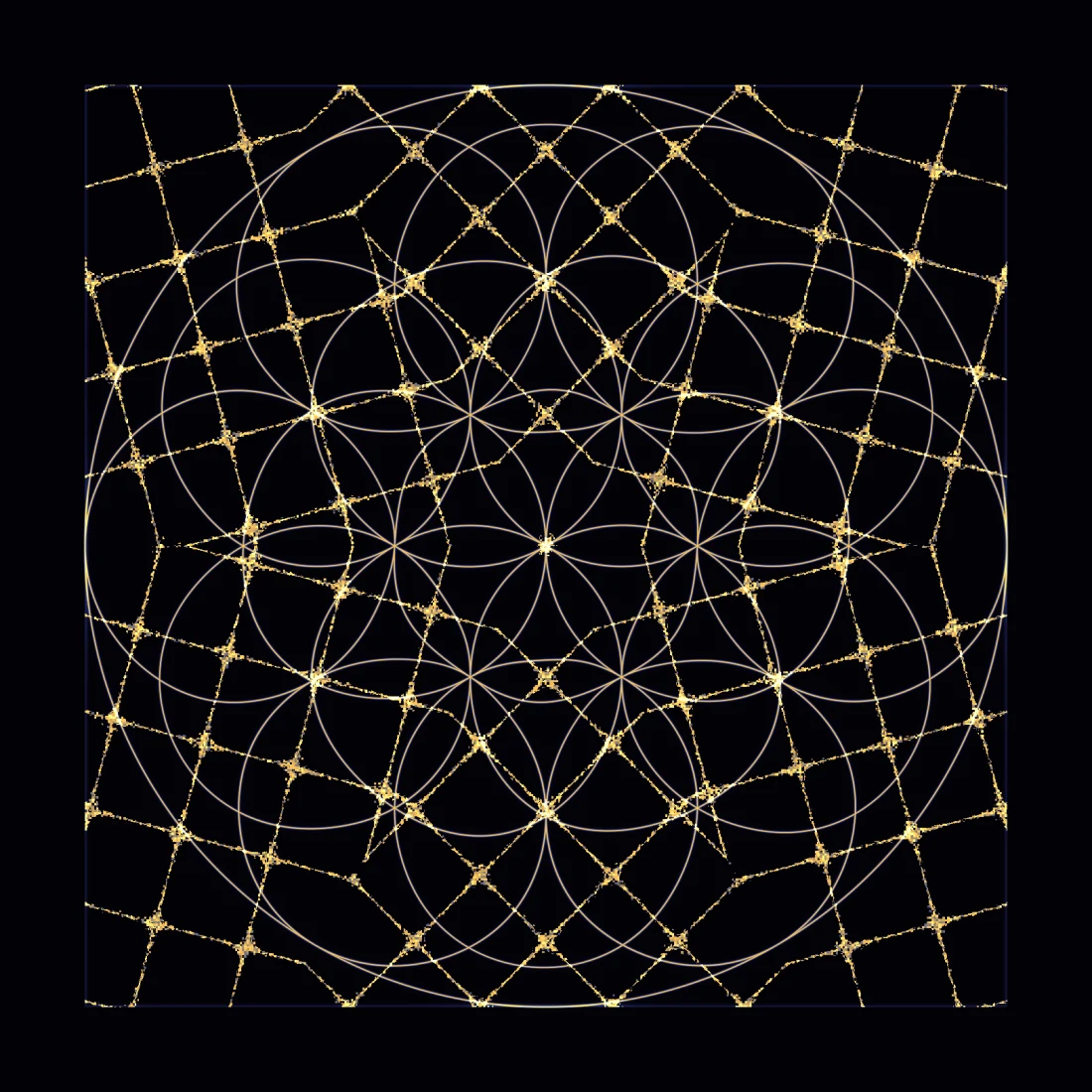 Fig. 03SandSand on a square plate driven from the center. The classic one. The lines where the plate does not move.✓
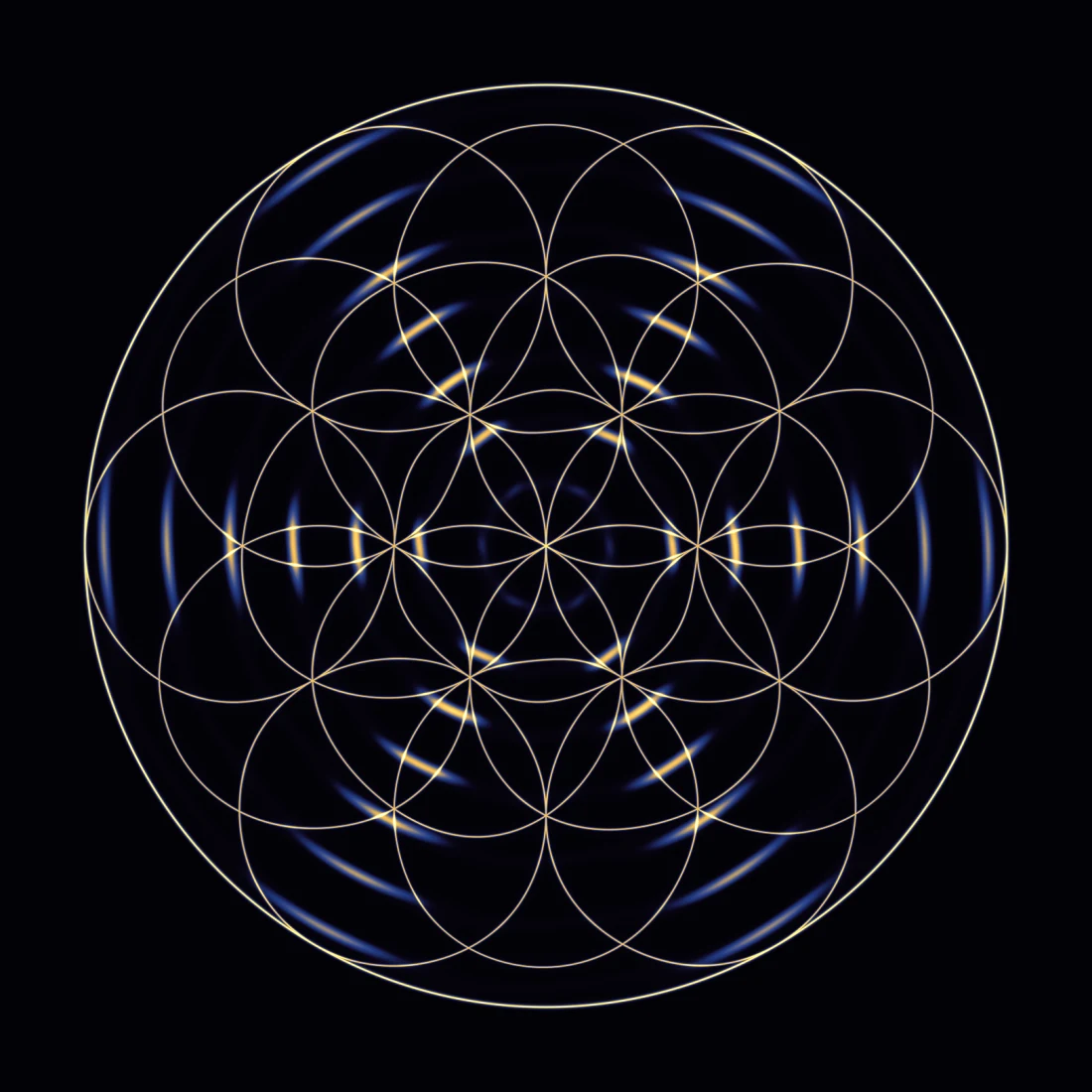 Fig. 04WaterStanding waves on the surface of a liquid. Rings, petals, relief. It's a model, not to scale: the real wave at 528 Hz is about a millimeter long.✓ Capillary wave model, not to scale.
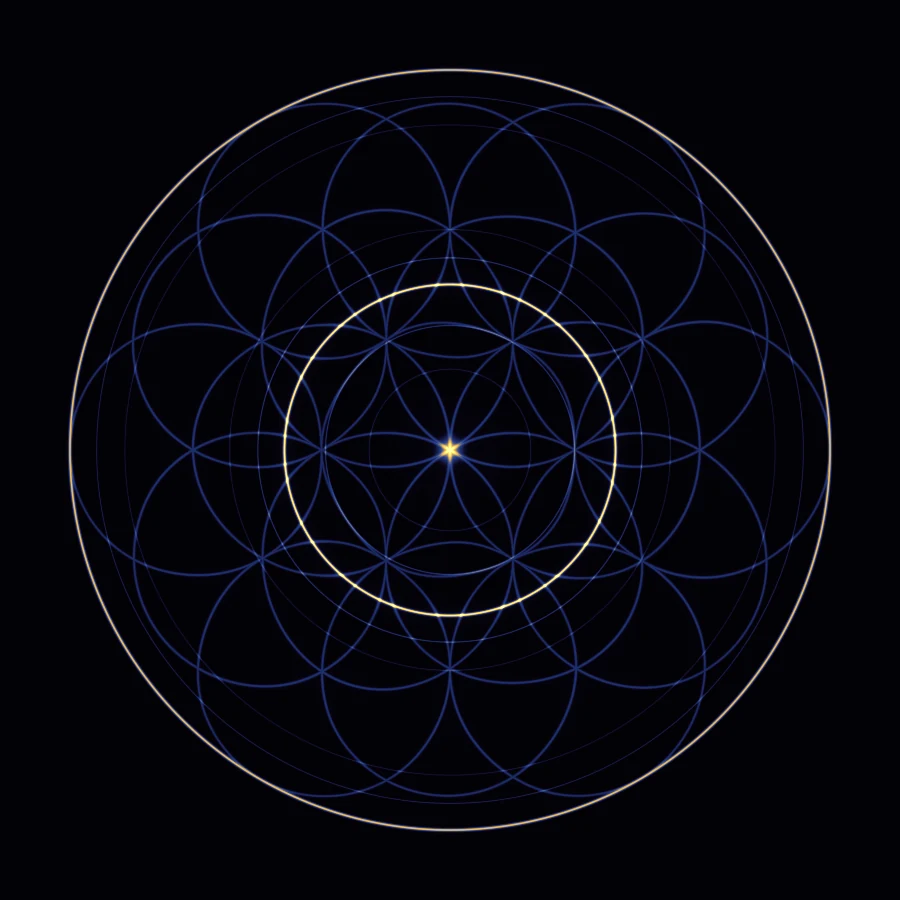
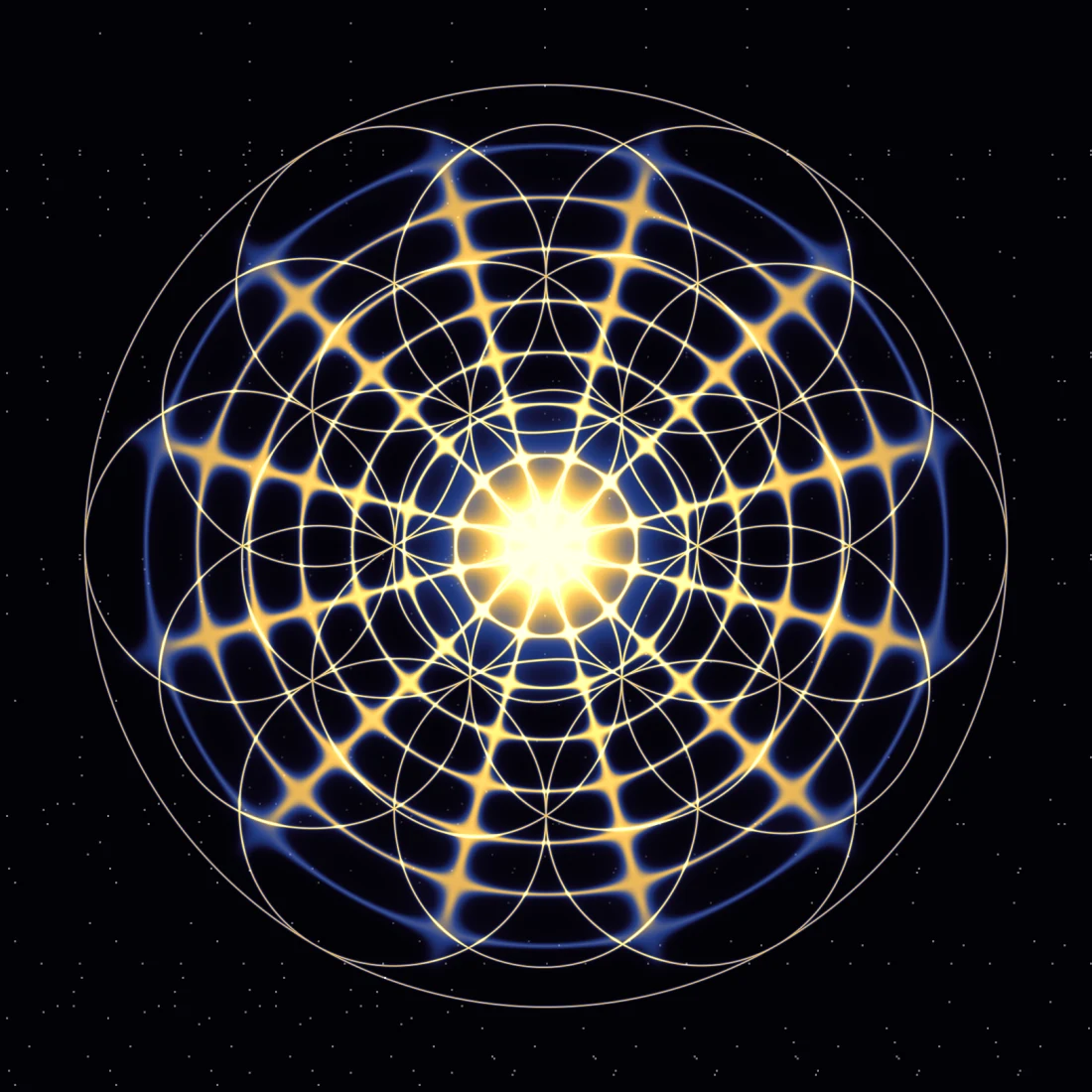 Fig. 05MandalaA drum: a round skin held at the rim. Its still lines are exact spokes and rings that multiply with the frequency.✓ Drum: exact Bessel nodal lines.
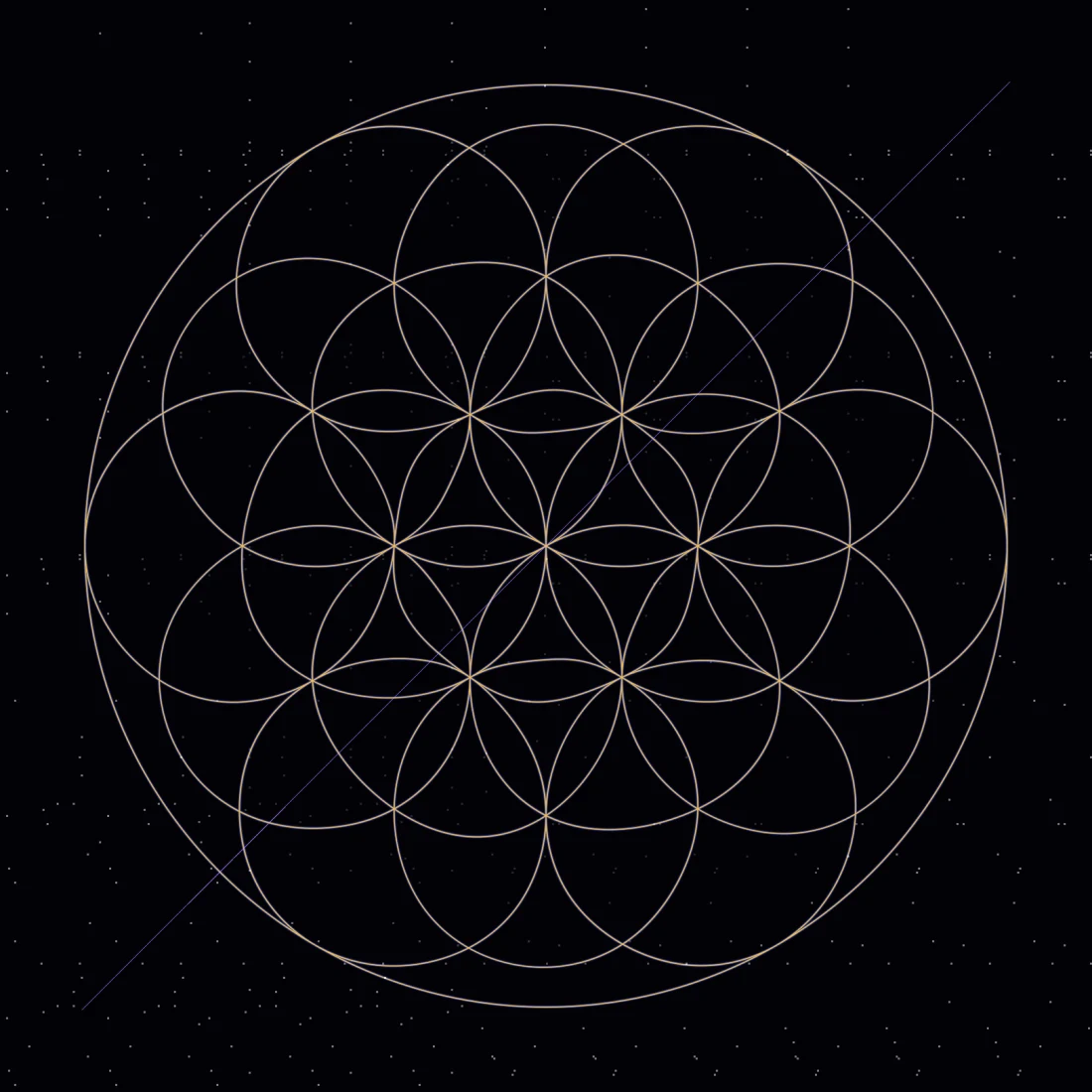 Fig. 06XYTwo tones form a Lissajous curve. The ratio between them decides whether the curve closes (3:2) or never ends (φ).✓ Lissajous a/b. φ never closes.
Every figure comes from a formula. Here is which one.
Nothing you see is a stored image or a hand-made animation. The figure is calculated in your browser, on the spot, from the sound that is playing.
Three steps, in real time
- 01MeasureIt reads the frequency from the tone the app generates, an audio file or the microphone: what is sounding and how strongly.
- 02CalculateWith that frequency it solves how a square plate driven from its centre vibrates: which areas move and which stay still.
- 03SettleEach grain of sand is a particle. It jumps where the plate moves and stays where it does not. The figure appears by itself, as on a real plate.
174 Hz · (4,4) 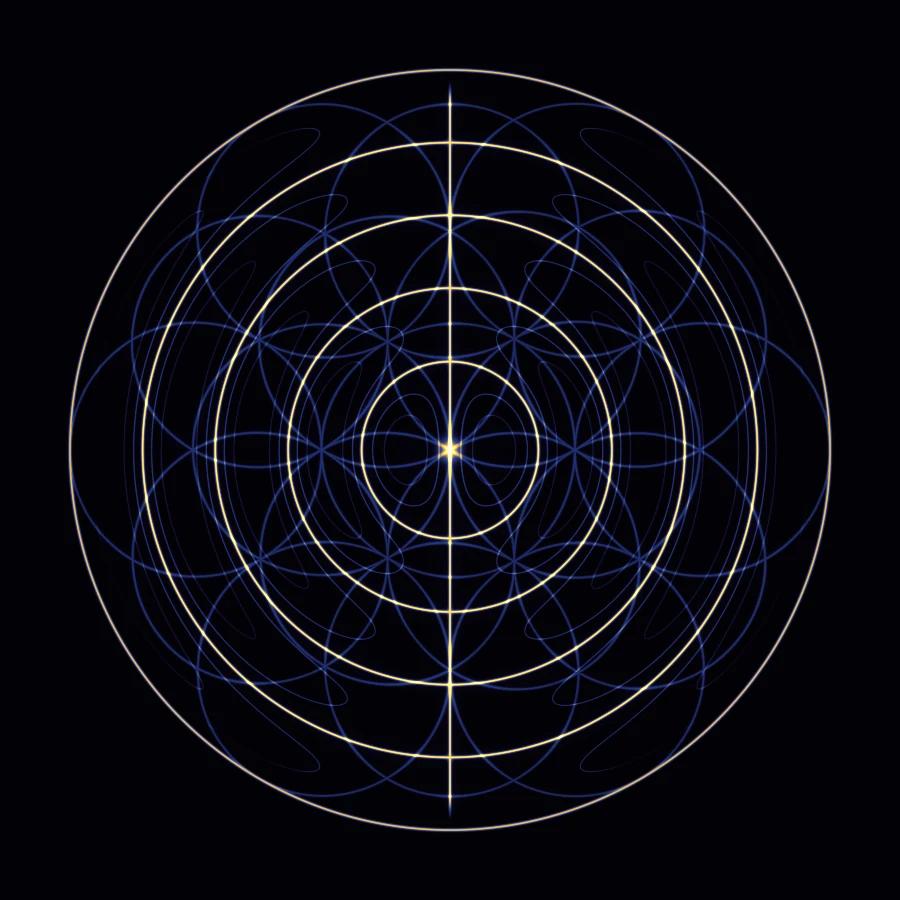
528 Hz · (8,6) 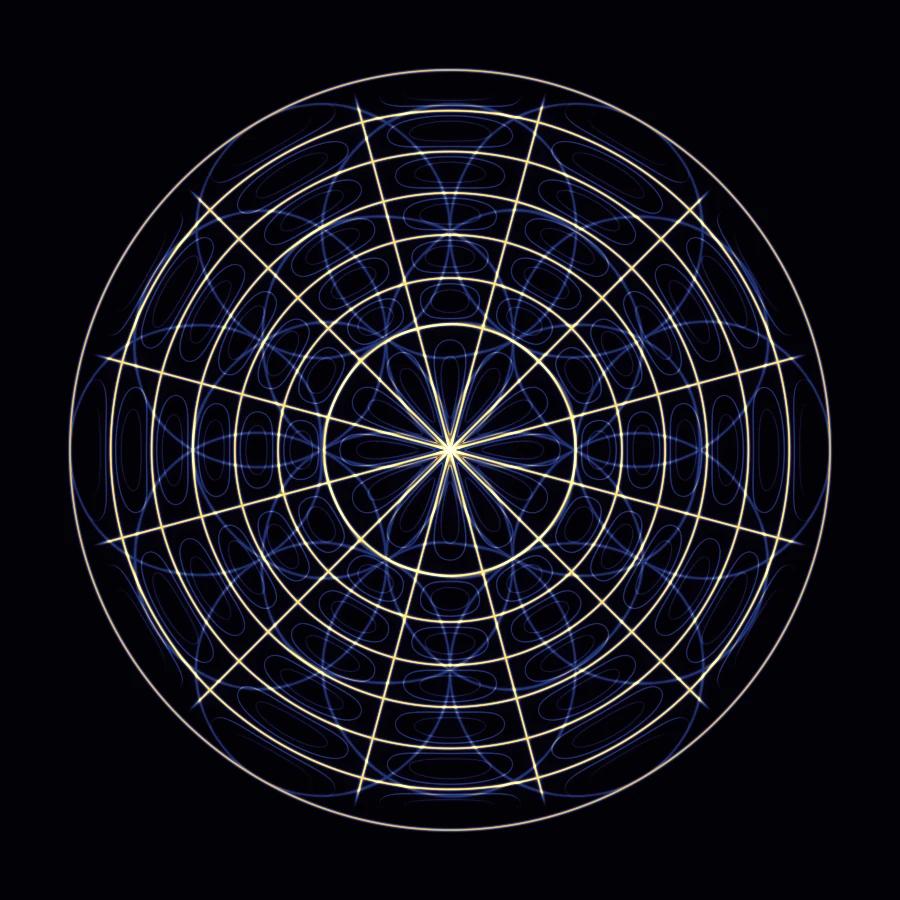
963 Hz · (12,6)
- The shape
The plate is square, thin and free at its edges. Each possible way of vibrating has two whole numbers, n and m, which count how many times it bends in each direction. The sand stays where φ is zero. This is Mary Waller's approximation for the free Kirchhoff plate, the classic description of Chladni figures.
φ = cos(nπx)·cos(mπy) + cos(mπx)·cos(nπy)
- The tone of each figure
Each figure has its own tone. C stands for the size of the plate: with C = 5.5 Hz, each of the nine Solfeggio frequencies lands on a different figure. Two very close notes can share a figure, as on a real plate.
f = C·(n² + m²)
- The setup: driven from the centre
The plate is held and driven at its centre, with a speaker underneath, as in real demonstrations. At the centre each figure is worth 2·cos(nπ/2)·cos(mπ/2): only those with even n and m receive energy. The rest do not move there and do not appear. That is why the figures are symmetrical.
- Between two figures
A tone almost never lands exactly on a figure. A real plate responds with several at once, and the one that is closest and moves most at the centre weighs most. With damping η = 0.01 and M_k the weight of each figure, the 2 to 4 heaviest are added together. So, as the frequency moves, one figure turns into the next without jumps. With two tones at once, the sand stays where both move little: √(a₁²·φ₁² + a₂²·φ₂²).
w = |φ_k(centre)| / M_k · 1 / √((f_k² − f²)² + (η·f_k·f)²)
What the plate does with four frequencies
| Frequency | Main figure | Its own tone | Others taking part |
|---|---|---|---|
| 174 Hz | (4,4) | 176 Hz | (6,0) 9 % · (6,2) 8 % · (4,2) 8 % |
| 432 Hz | (8,4) | 440 Hz | (8,2) 15 % · (6,6) 12 % · (6,4) 7 % |
| 528 Hz | (8,6) | 550 Hz | (10,0) 50 % · (10,2) 49 % · (8,4) 28 % |
| 963 Hz | (12,6) | 990 Hz | (10,8) 47 % · (12,4) 35 % · (12,2) 20 % |
Values calculated by the app's core when this page is generated. The percentage is each figure's weight relative to the main one. On screen, the app always shows the mode (n,m) of the figure you are looking at.
Grains that move, not an image
The sand is a particle simulation. On a large screen that is around a hundred thousand grains, and the graphics card moves each one separately. The sand drifts to the still lines by itself and the figure appears little by little. When the tone changes, the previous figure comes apart and the new one forms, with no fades or cuts. On a slower device the app lowers the number of grains by itself; the figure is the same.
- Where the plate moves, the grain jumps. The more it moves, the more it jumps.
- When it jumps, it tends to land where the plate moves less.
- Where the plate barely moves, the grain stays still.
The other modes, each with its own law
- Mandala
- A drum: a round skin held at its edge. Its still lines are m diameters and n − 1 circles, with exact radii that come from the zeros of the Bessel functions, j_(m,k) / j_(m,n). Its tone is f = 32 Hz · j_(m,n). It is a different instrument: that is why the same frequency looks different than on the plate.
- XY
- The real Lissajous curve of the two channels, left against right.
- Water
- There is no exact simulation here and the app says so on screen: "Water · model, not to scale". Small waves follow surface tension, k ∝ f^(2/3). In a real dish, at 528 Hz each wave measures about 1.2 mm: it is enlarged to be visible.
- Artistic mode
- The earlier free style is still available, always labelled: it is not physical.
Why it is precise: four reasons you can check
- 01It measures frequency in fine detailIt analyses the sound with two windows at once, a long one for low tones (16,384 samples) and a short one for high tones (4,096), and refines the result between points of the spectrum. In a test with computer-generated pure tones, the error was under 0.01 cents (a cent is one hundredth of a semitone).
- 02The figure is a formula, not an imageThe still lines are calculated point by point with the equations on this page. There are no textures or stored figures. The same frequency gives the same figure on any device, today and a year from now.
- 03It is checked against referencesThe model has automated tests that run on every change: the natural frequencies, the response weights, the figures of the nine Solfeggio tones. The drum's Bessel zeros are checked against the Abramowitz and Stegun tables.
- 04It separates what it calculates from what it does notThe physical figure is one thing. The geometry layers (Flower of Life, Metatron and the rest) are symbols from tradition and are labelled as such: they do not come from the sound, which only changes their brightness.
What it is not: the limits, stated plainly
- It is an ideal plate. A real plate depends on its material, thickness, size and how it is held. Two different plates give different figures at the same frequency. Cymatica calculates one ideal square plate, always the same.
- The size of the plate is a choice. The constant C was chosen so the app's frequencies give distinct figures. On another plate, 528 Hz would land on another figure.
- The shape formula is an approximation. Waller's describes the figures of a free plate well, but it is not the exact solution of the plate equation.
- The names of the frequencies come from tradition. That 528 Hz is linked to the solar plexus is not physics. The figure is.
- It promises no effect on the body. Cymatica shows what a sound looks like. What you feel while listening is yours.
Nine tones, nine shapes, nine intentions.
The Solfeggio frequencies are a nine-tone scale, one for each energy center, each with its own name: the love frequency, the aura cleanse, the God frequency. Here you hear them, see the figure each one forms on the plate and sit with it.
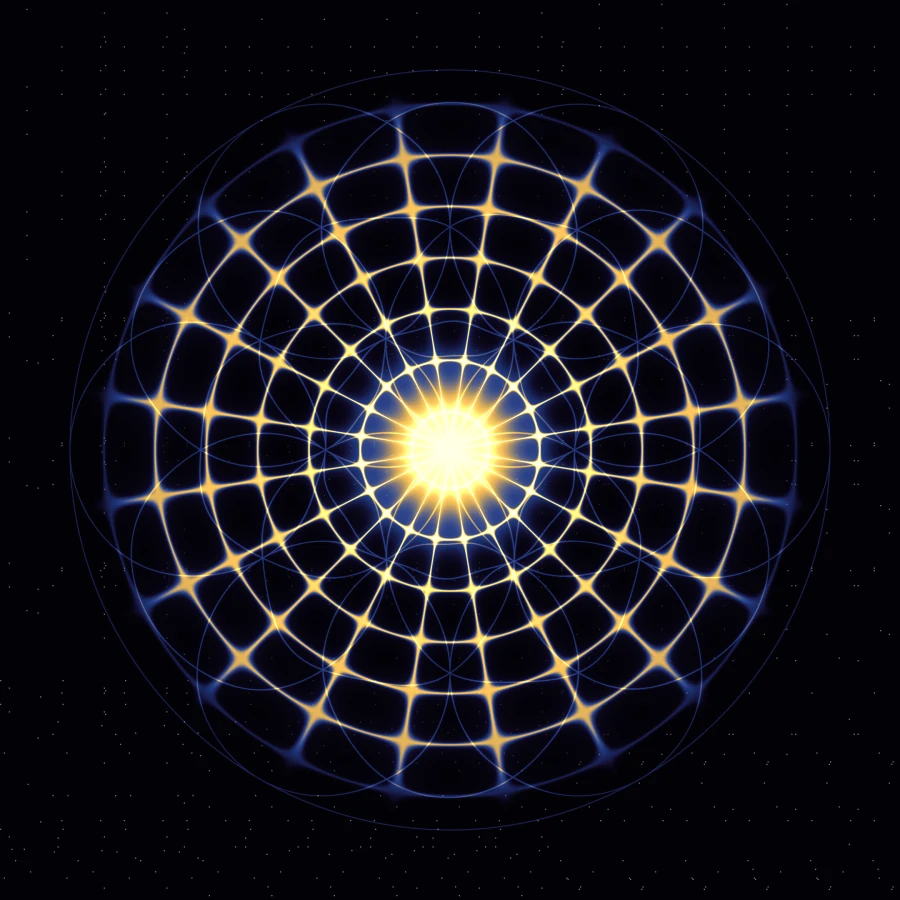
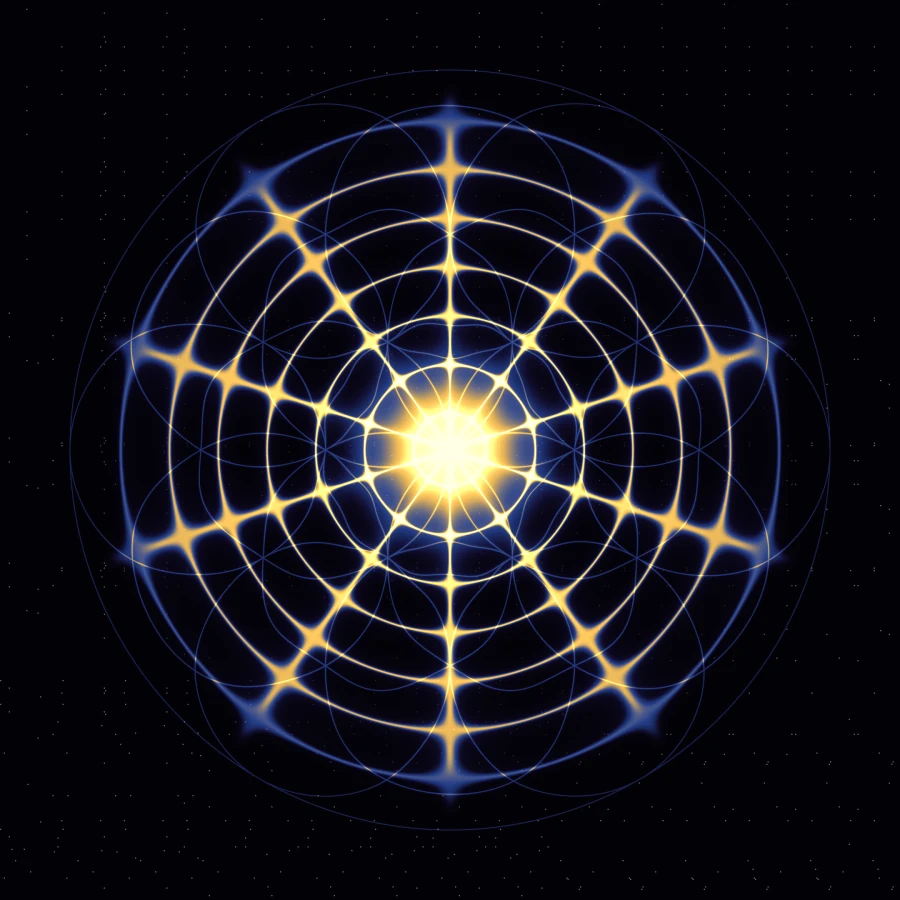
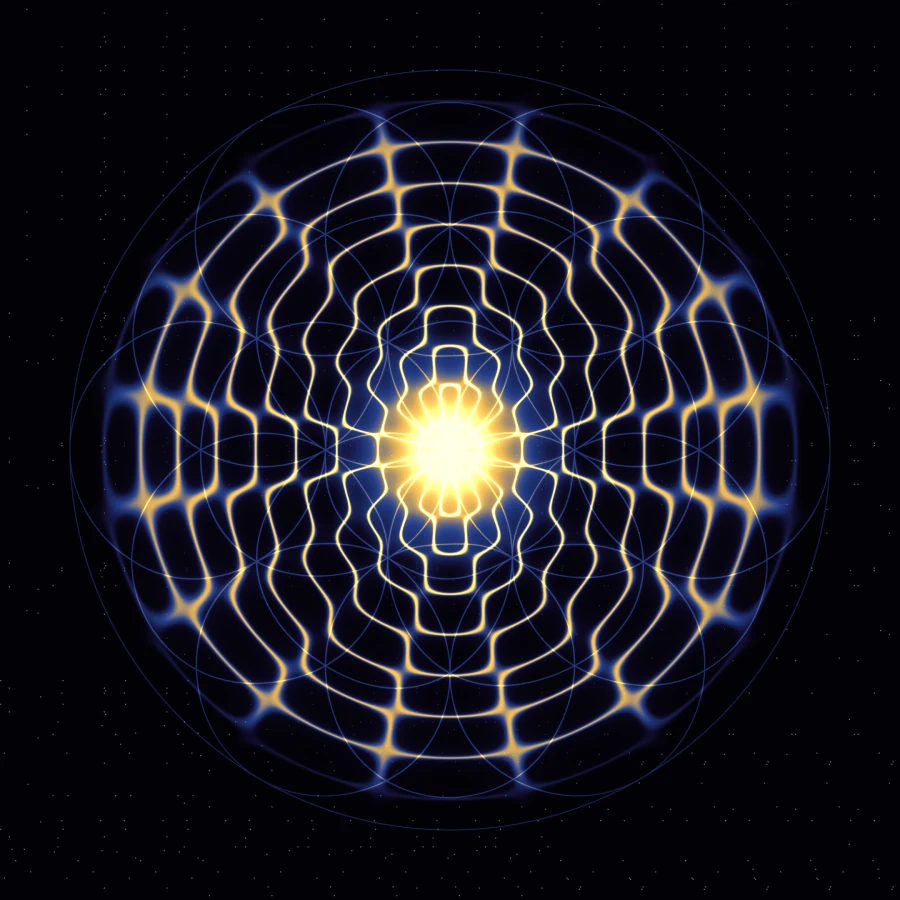
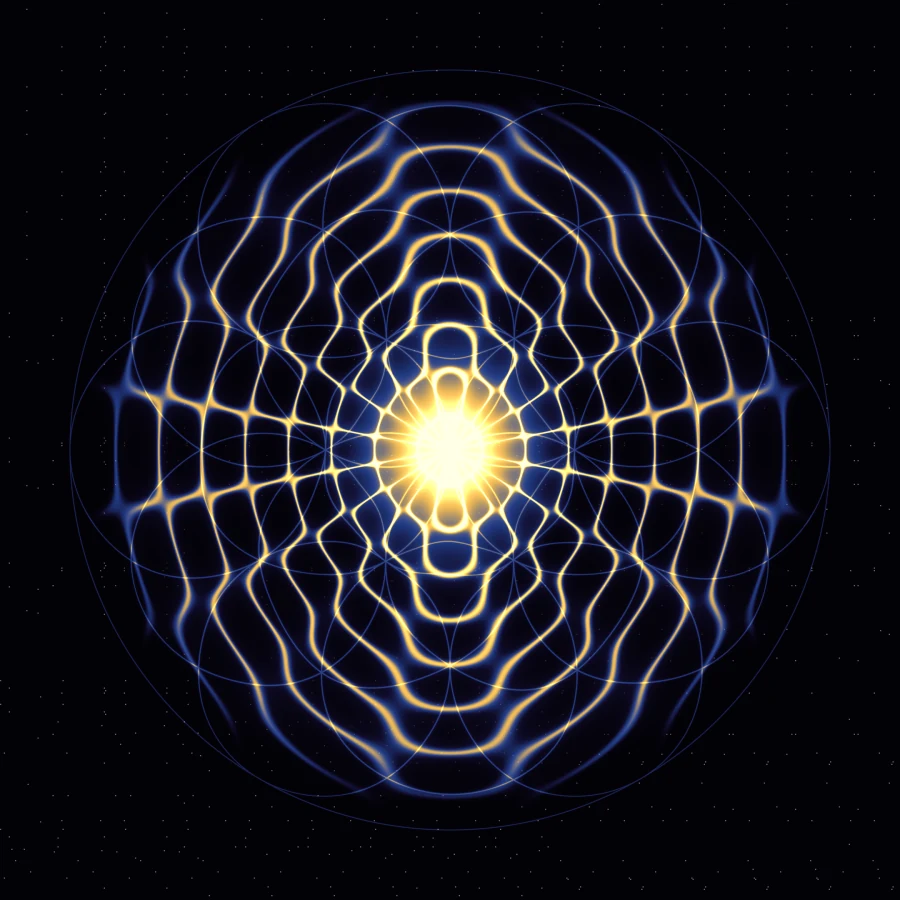
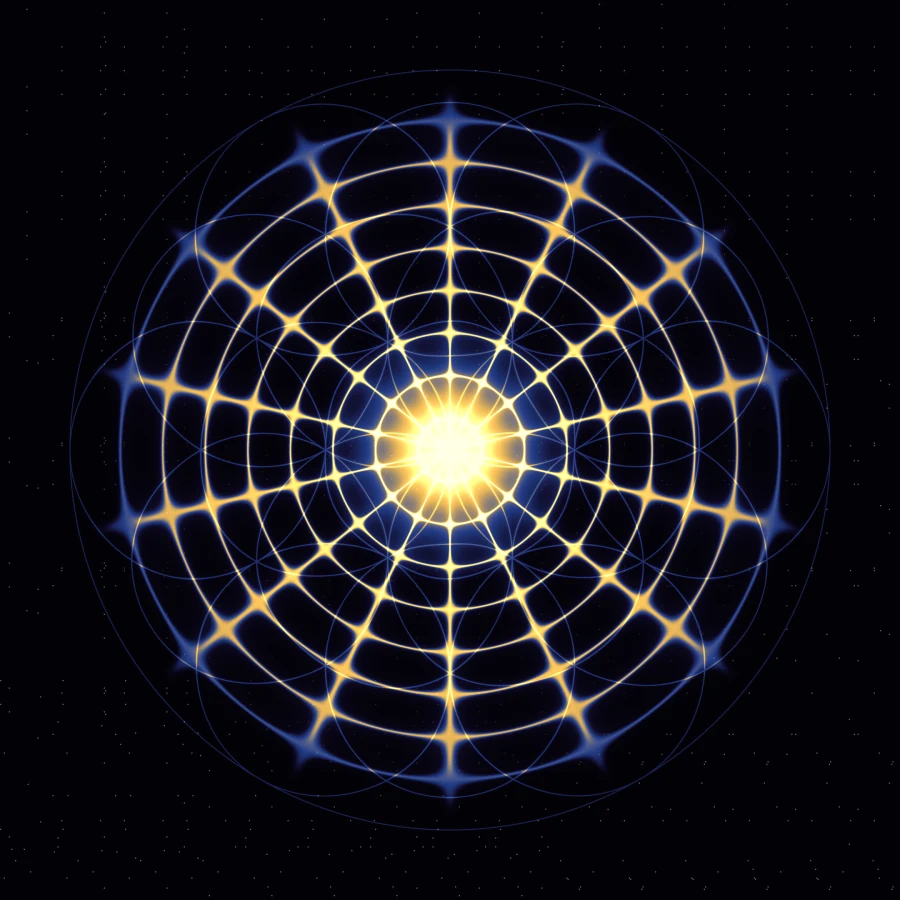
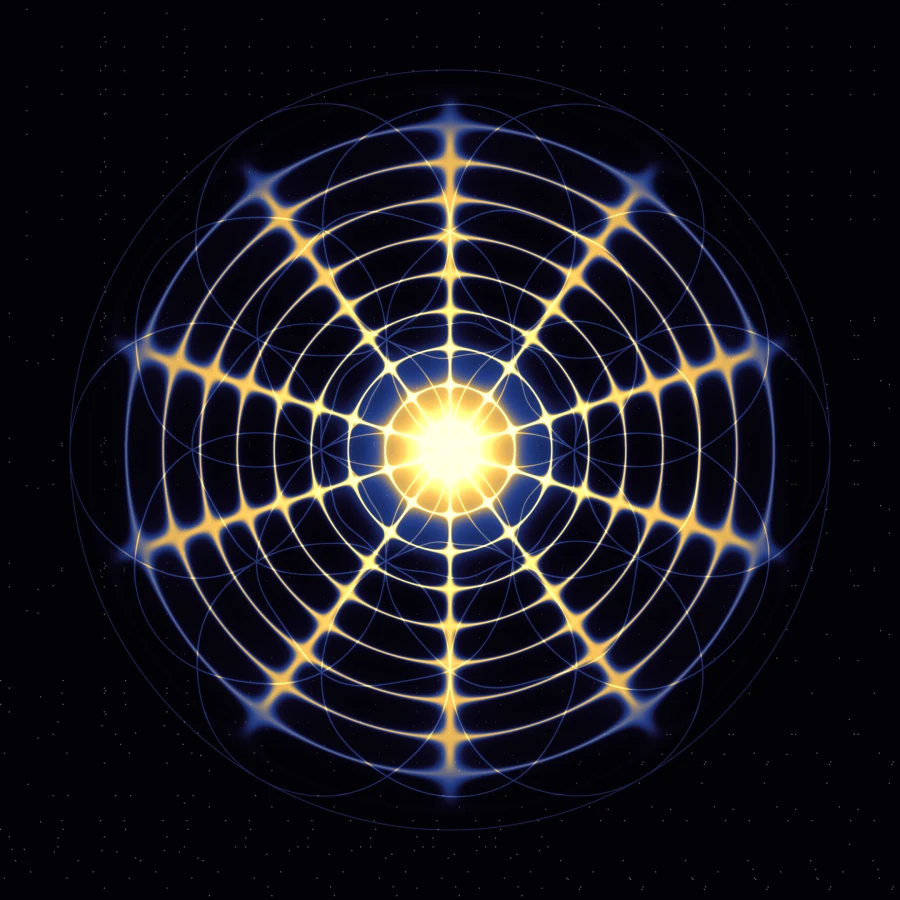
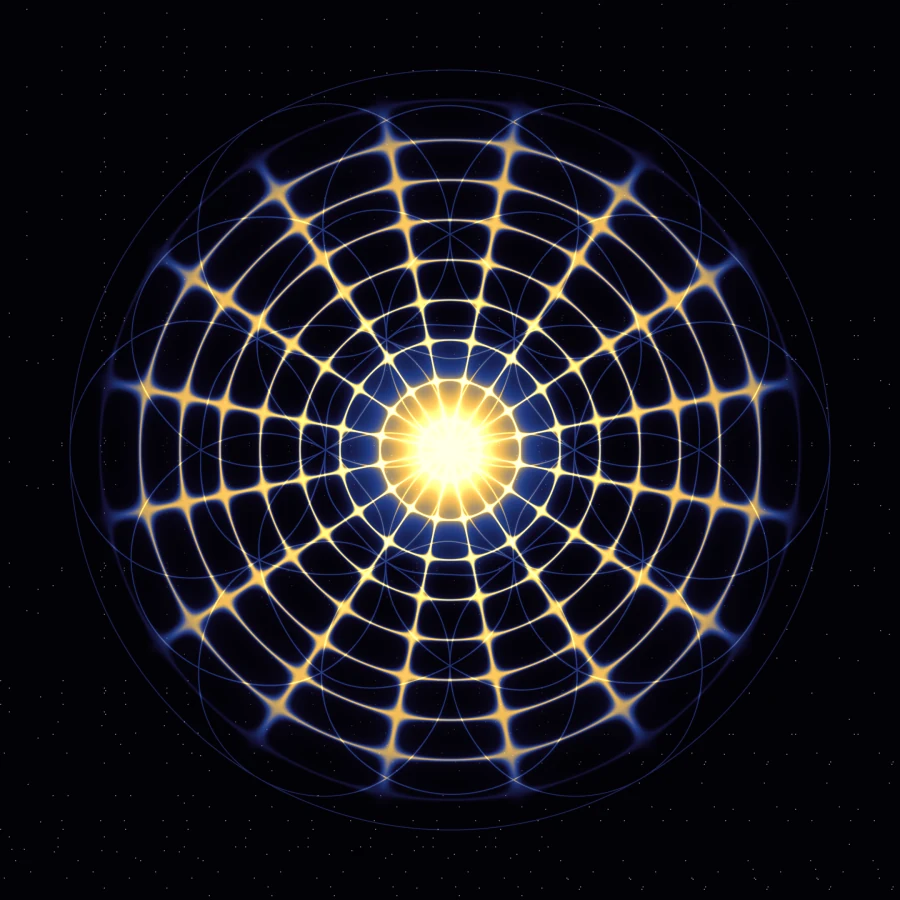
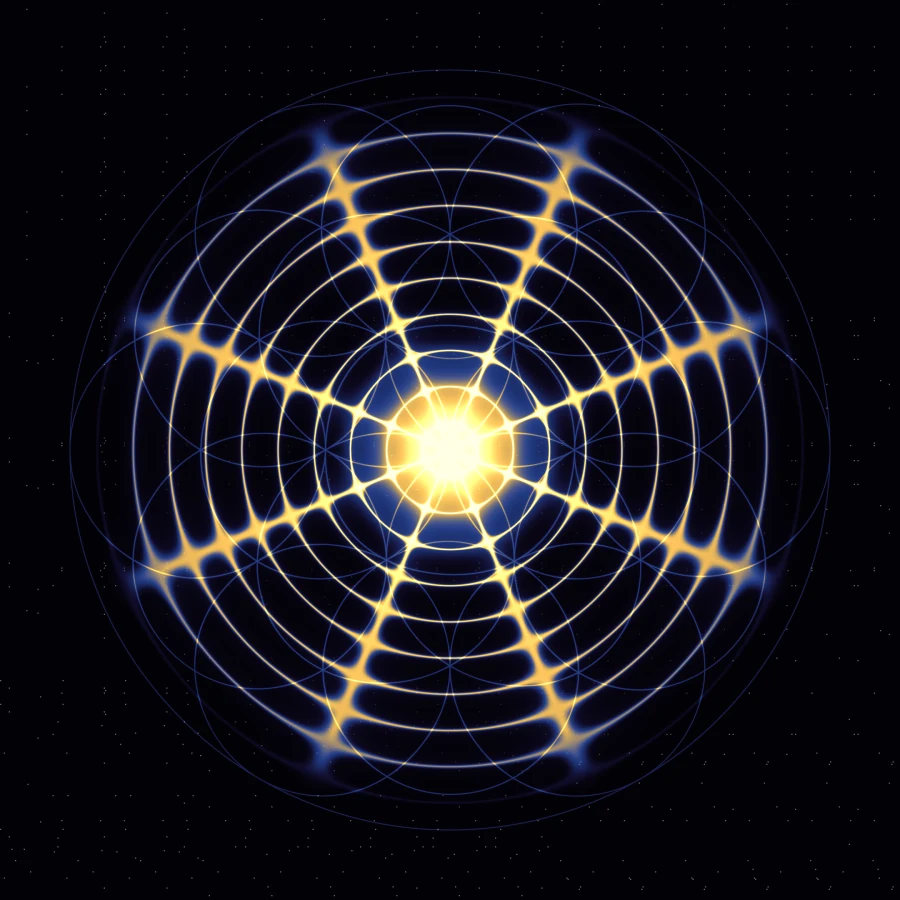
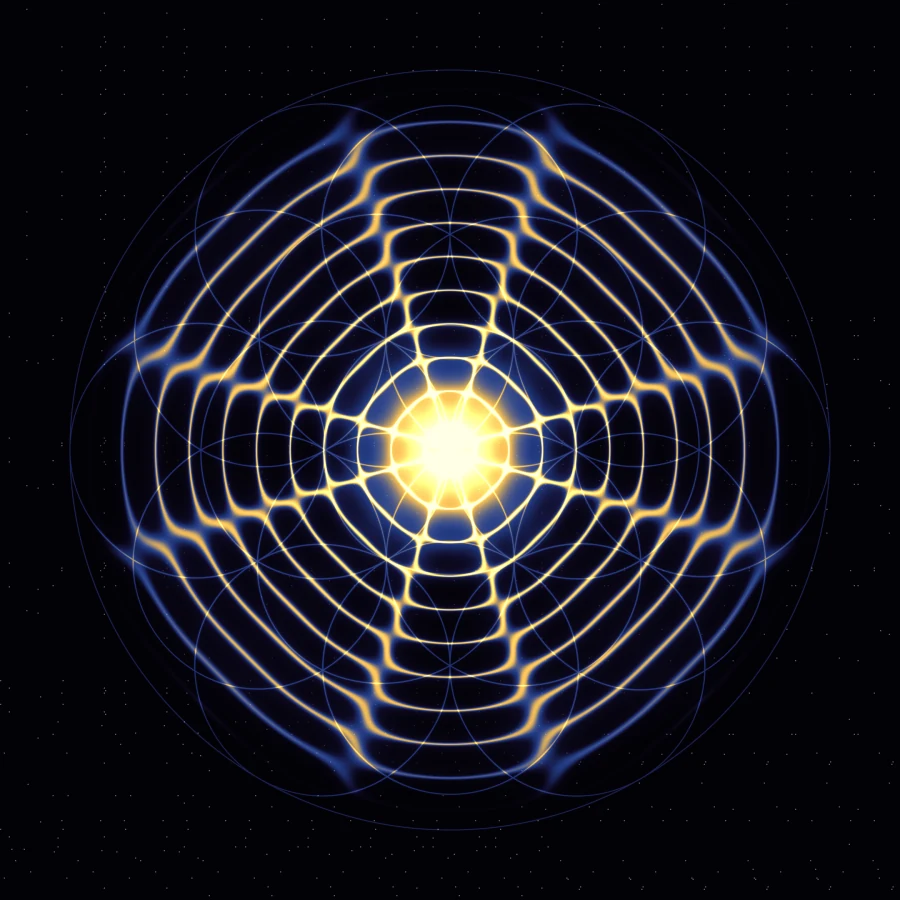
The names come from the Solfeggio tradition; the plate's figure comes from a physical model. Here they go together, each with its label.
See the 9 frequenciesSymbolic geometry on top of the physics.
Seed, Flower and Fruit of Life, Metatron's Cube, the five Platonic solids, the torus, the golden spiral. Sixteen figures from the tradition you can put on top of the plate's figure with + Geometry: by default you see only the physics.
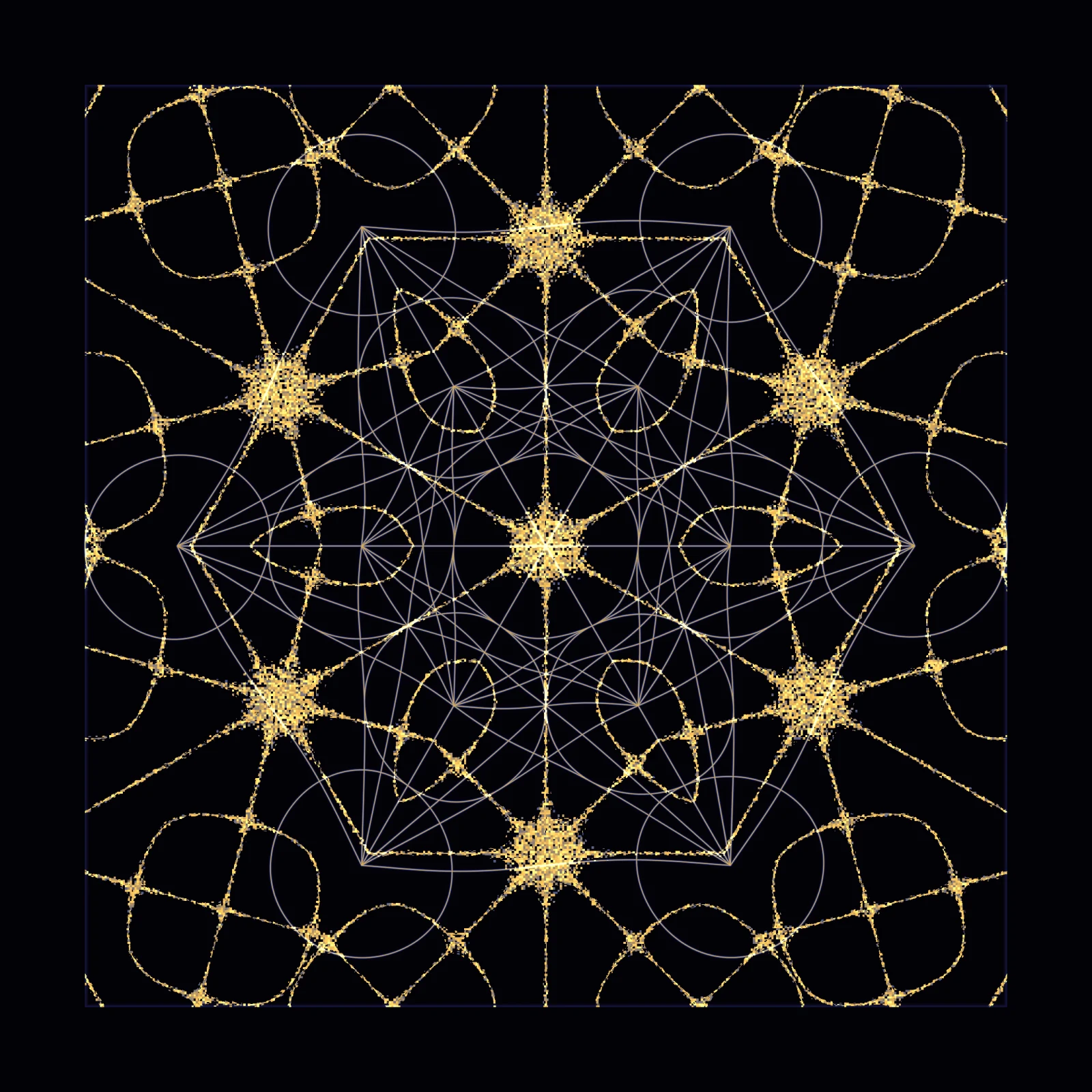
Fig. 11 · Metatron's Cube, a symbolic layer, over the field. 852.00 Hz · G#5
16layers
Drawings from the tradition, not calculated from the sound: the sound only changes their brightness.
- Seed of Life
- Flower of Life
- Fruit of Life
- Metatron's Cube
- Tree of Life
- Vesica piscis
- Golden spiral
- Sunflower (phyllotaxis)
- Tetrahedron
- Octahedron
- Icosahedron
- Cube
- Dodecahedron
- Torus
- Atom
- Galaxy
In grey, the Pro ones. In white, the ones you get free. The free version gives you Flower, Seed and Golden spiral. All 16 are in Pro.
φ
With the ratio at φ, the Sunflower spaces its seeds 137.5 degrees apart.
The layers don't come from the sound. They're fixed figures from the tradition, and the pairing of each layer with a frequency comes from there too, from the poster, not from physics. The sound only changes their brightness and gives them a slight ripple; some change with the ratio between the two tones: the Sunflower redistributes its seeds by the golden angle when you set the ratio to φ. In the app they're labelled as a symbolic layer, separate from the physical figure.
See the Flower of Life at 528 HzEvery frequency group, explained.
What each group is, how it's made with its real formulas and figures, one line per frequency and what you see on the plate. The same sheets you open with ⓘ in the app.
A place to come back to every day.
Three guided practices for body, mind and soul: breathe with the shape, let the tones build up from root to crown, and let a slow pulse carry you. Each one gives you a concrete shape to look at and an intention to sit with for a few minutes.
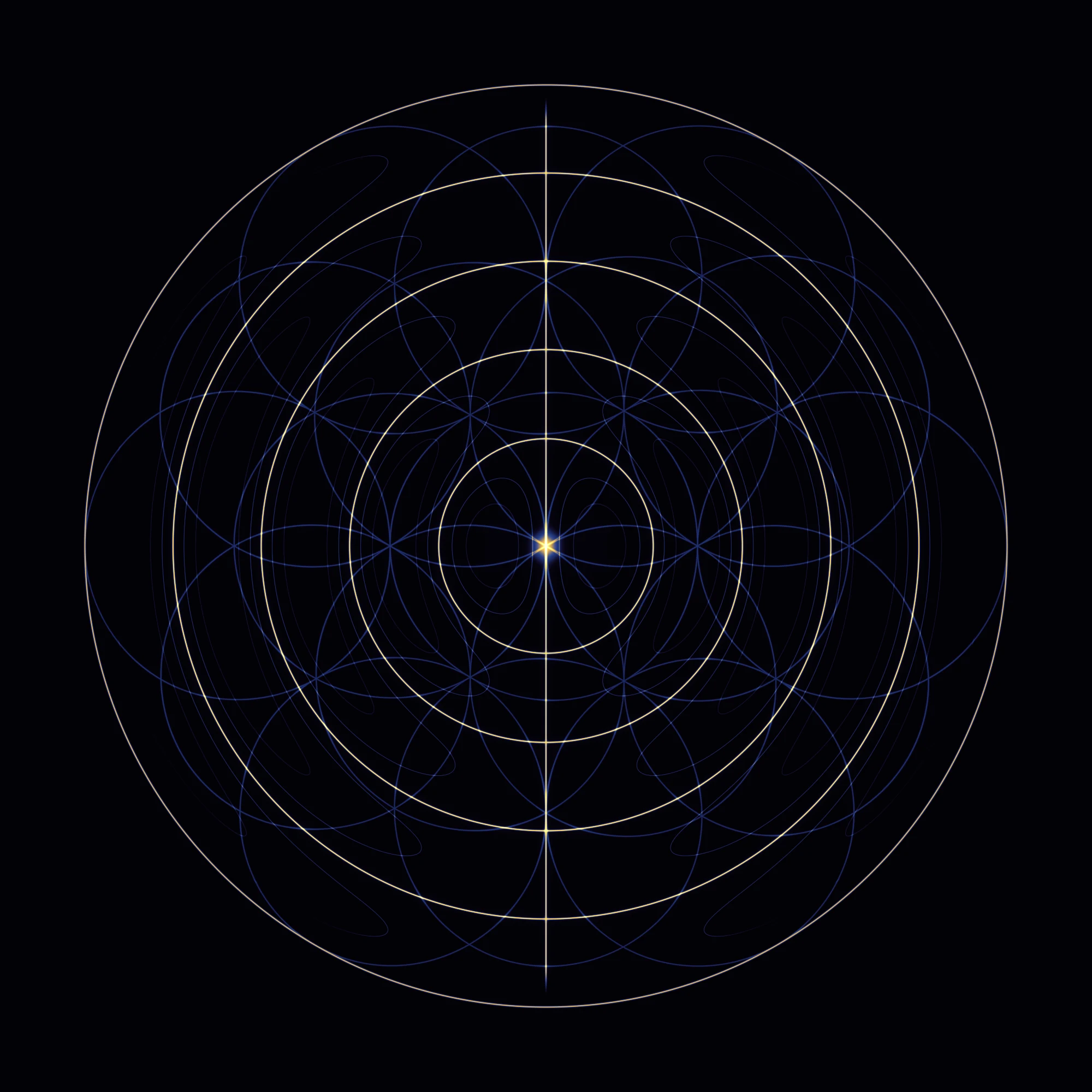
Fig. 12 · Meditate: the visual breathes with you. 528.00 Hz · C5 +16¢
Meditate
You choose the length, a breathing pattern (coherent 5-5, box 4-4-4-4 or 4-7-8) and a sound. The visual breathes with you: it expands on the inhale and contracts on the exhale. With Pro, up to 60 minutes.
Layers
The tones come in one by one and keep sounding under the next, until they all play together as one chord. From root to crown, free; the other Layers, with Pro.
Binaural
A slightly different tone in each ear. What you hear is a slow pulse that exists in neither channel on its own. Headphones only. Free gives you one minute, three times a day; Pro has no limit.
In the free version, with an account: Meditate for 5 minutes a day, 1 minute of binaural and the Layers from root to crown.
See the practicesYour music has a shape. Record it in 4K.
If you make music or content, Cymatica is a visual that never repeats itself, because it comes out of your sound and not out of a template.
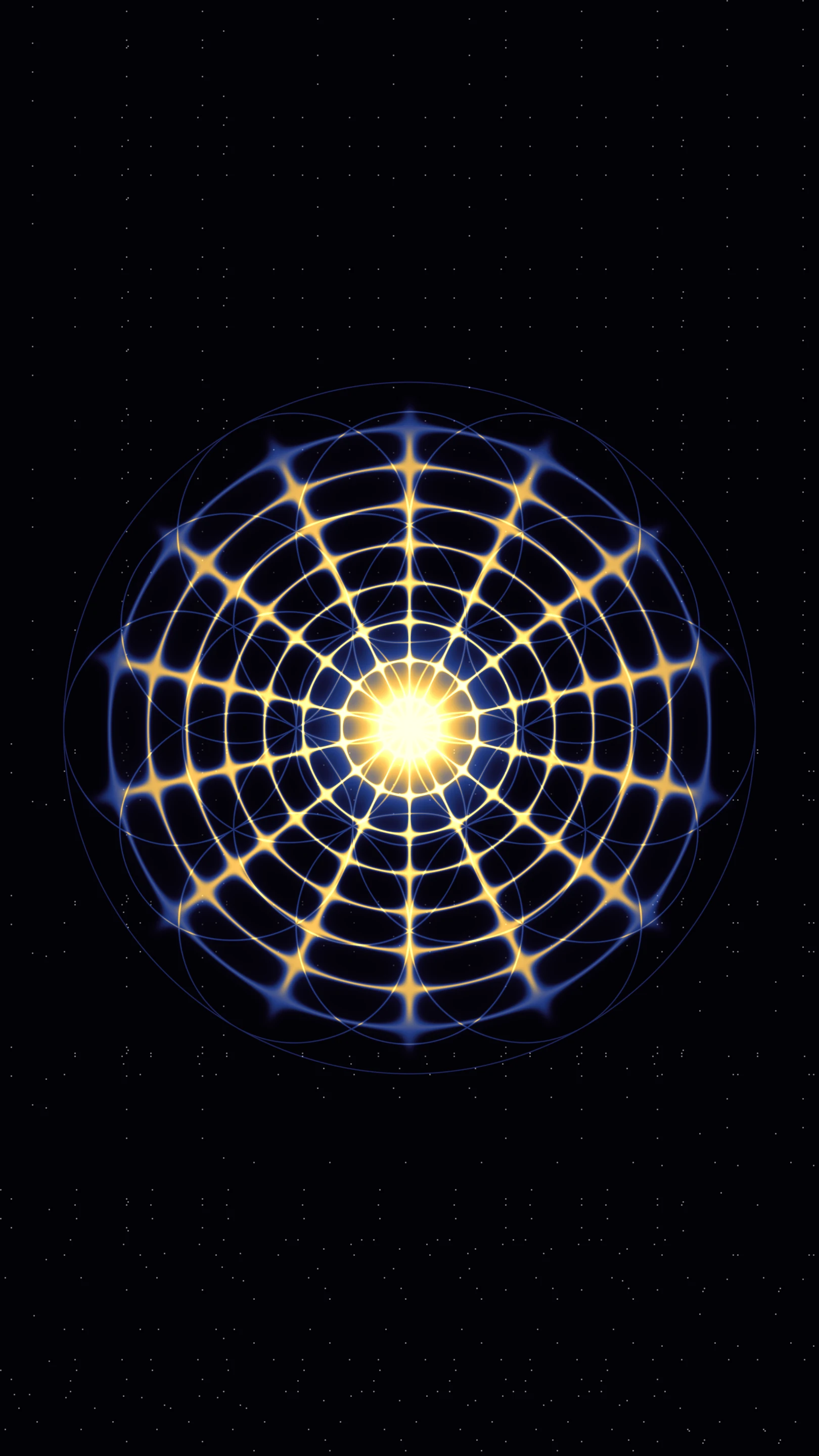
Fig. 14 · 9:16 output, up to 2160 × 3840. No watermark in Pro
Analyse your audio
InputMicrophone or file. Cymatica detects the three main peaks with an error of 0.003 cents on pure tones and shows them in real time.
4K
Export in your format
Output9:16, 1:1, 4:5 or 16:9, up to 4K, MP4 or WebM with audio, with safe-area guides for reels and no watermark in Pro.
Play it with MIDI
ControlNote → frequency, mod wheel → geometry, CC74 → detail, pitch bend ±2 semitones. Tuning at A = 440 or 432.
Put it in Ableton
Live 12 SuiteCymatica for Ableton is a Max for Live device that shows the cymatics of any track in Live 12 Suite. Included in Pro yearly and in Founders.

Fig. 15 · Axel, no filters.
Axel Barros
Seventeen years making techno. Now sound takes care of me.
I was The Unborn Child for seventeen years. I founded Wrong Theory Records, I played at Razzmatazz, at Input, at HÖR Berlin. I am a Certified Ableton Trainer and I still teach production and sound design.
I left music as a career and I'm leaving behind what was hurting me. Cymatica came out of a night in the studio: I put on a 528 Hz tone out of curiosity and spent an hour watching the shape change as I moved it one hertz. It was the first time in a long while that I'd been still.
I come from the studio, not from a retreat. The practices inside are the ones I use every morning to come back to my body, find my calm and start the day whole: a shape in front of me and an intention inside. If they work for me, maybe they'll work for you too.
Axel · Barcelona
17years
making techno as The Unborn Child, from Razzmatazz to HÖR Berlin.
528Hz
The tone that kept me still for an hour, one night in the studio. Cymatica was born there.